The game is designed to teach through play, but an idle RPG can introduce several progression systems in a short period. This guide explains how to read those systems and avoid common early mistakes without prescribing a single “correct” build.
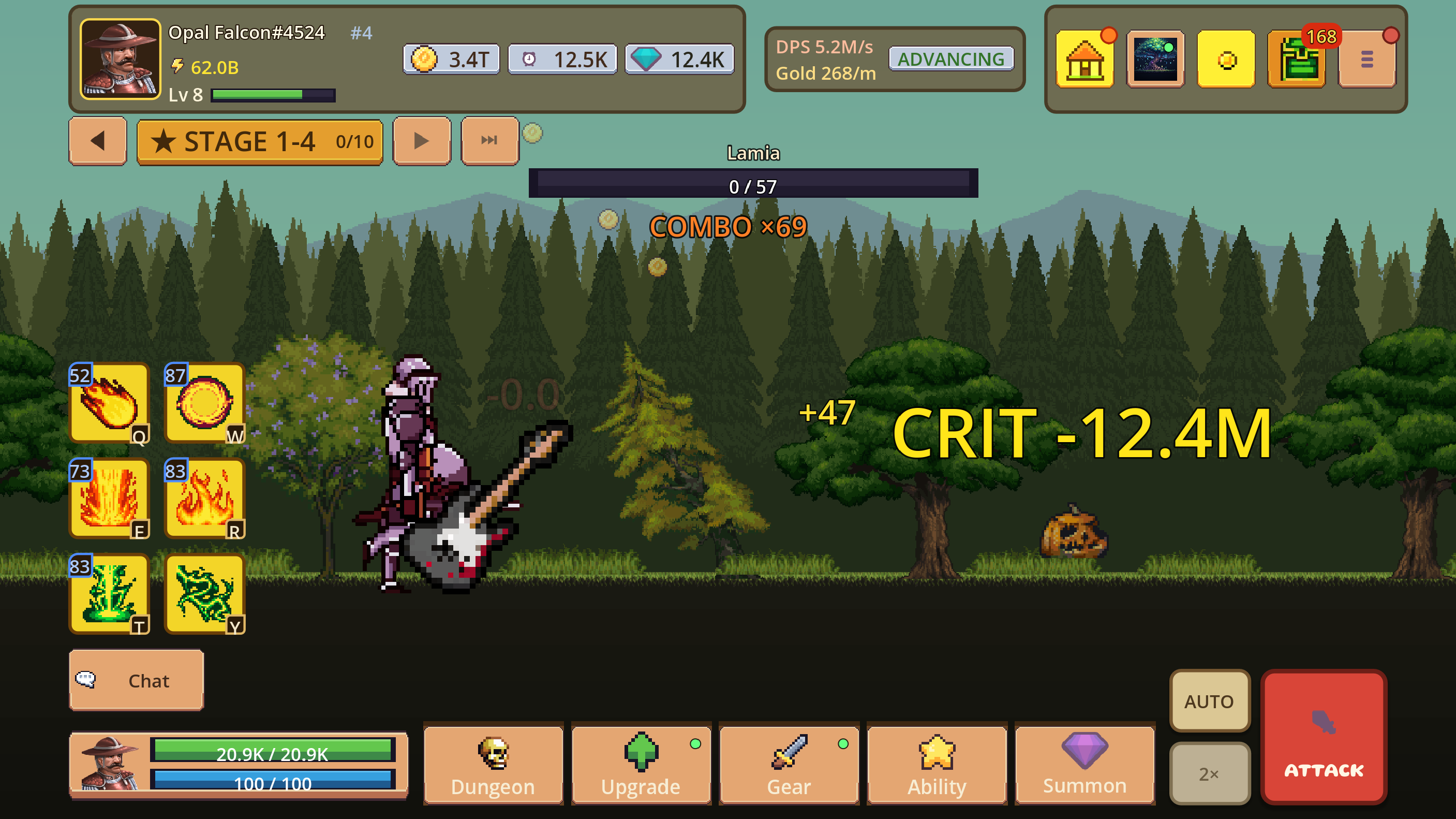
Begin by observing one full battle
Before opening every menu, watch a complete encounter. Notice how quickly enemies fall, which party member takes pressure, and whether the run is stable or barely succeeds. That observation gives meaning to later statistics. An upgrade is only useful in relation to a problem you are trying to solve.
Auto-battle handles repeated actions, but the outcome reflects preparation. If the party consistently loses at the same point, the setup is communicating something: insufficient survival, insufficient damage, or an unreliable combination of abilities.
Read equipment as a set, not a pile
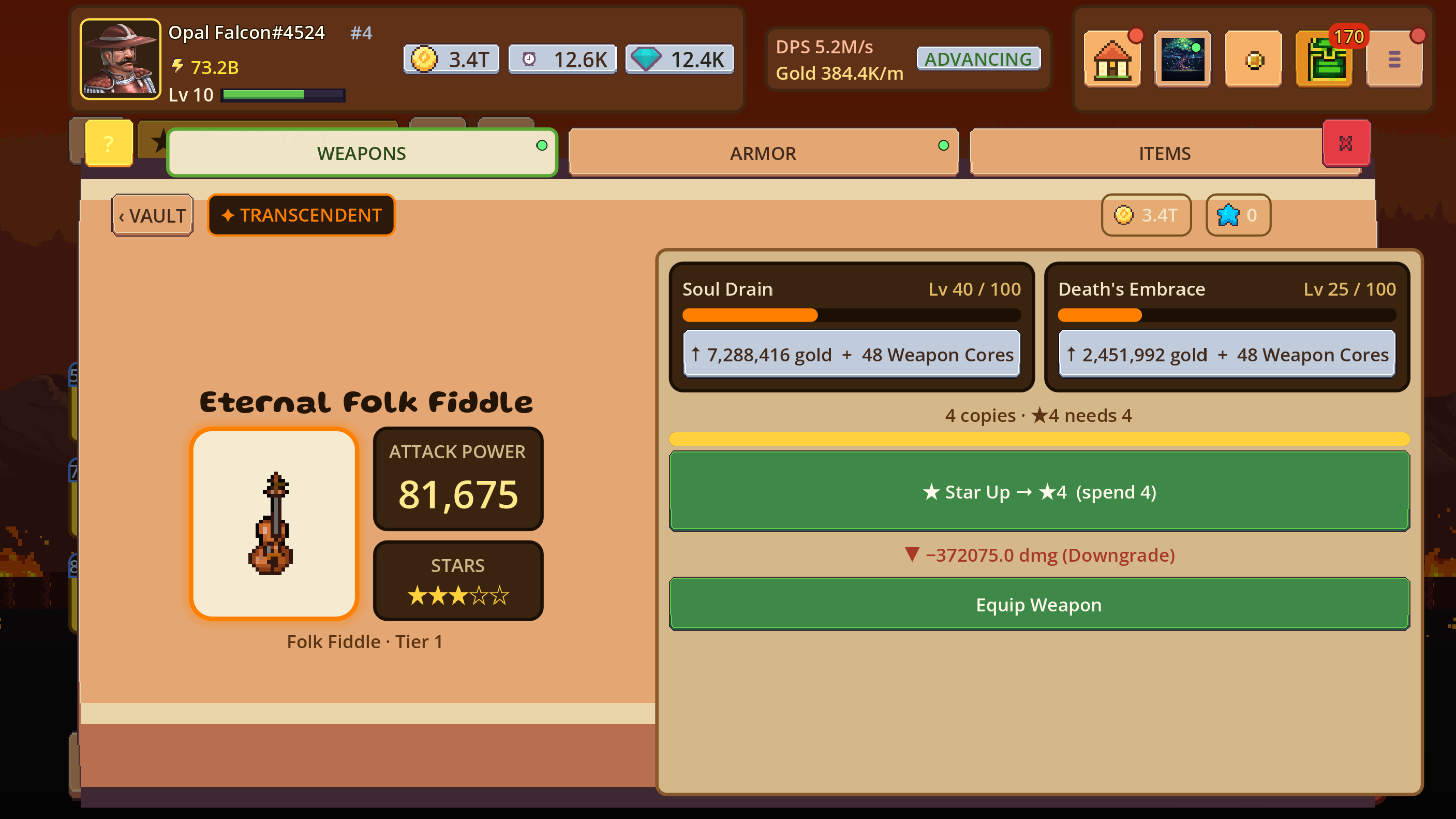
New gear creates an immediate temptation to equip the item with the largest number. Early on, filling empty slots is usually valuable because each slot adds a new source of power. After that, compare an item with what it replaces and consider the current obstacle.
Keep the old item until you understand the change. Testing one replacement at a time lets you connect cause and result. Equipping many items and spending several upgrade currencies simultaneously may increase power, but it teaches very little about which decision mattered.
Use abilities to answer a specific need
Ability investment is most useful when it has a job. If the party is defeated before dealing meaningful damage, prioritize durability or mitigation. If it remains alive but cannot finish an encounter, look for damage improvements. If results vary widely, consistency may be more important than the highest possible peak.
You do not need a perfect long-term build during the first session. The useful goal is to form a hypothesis, make one change, and observe the result. That loop is the heart of the progression system.
Treat summons as optional acceleration
The summon screen displays the relevant probabilities and visible pity counter. Read them before spending currency. A single pull is a chance, not a promise; the hard-pity boundary is the guarantee. Do not spend simply because a short run of results “feels due.” Independent random outcomes do not remember disappointment unless an explicitly stated pity system changes the rule.
Approach world bosses as build checks
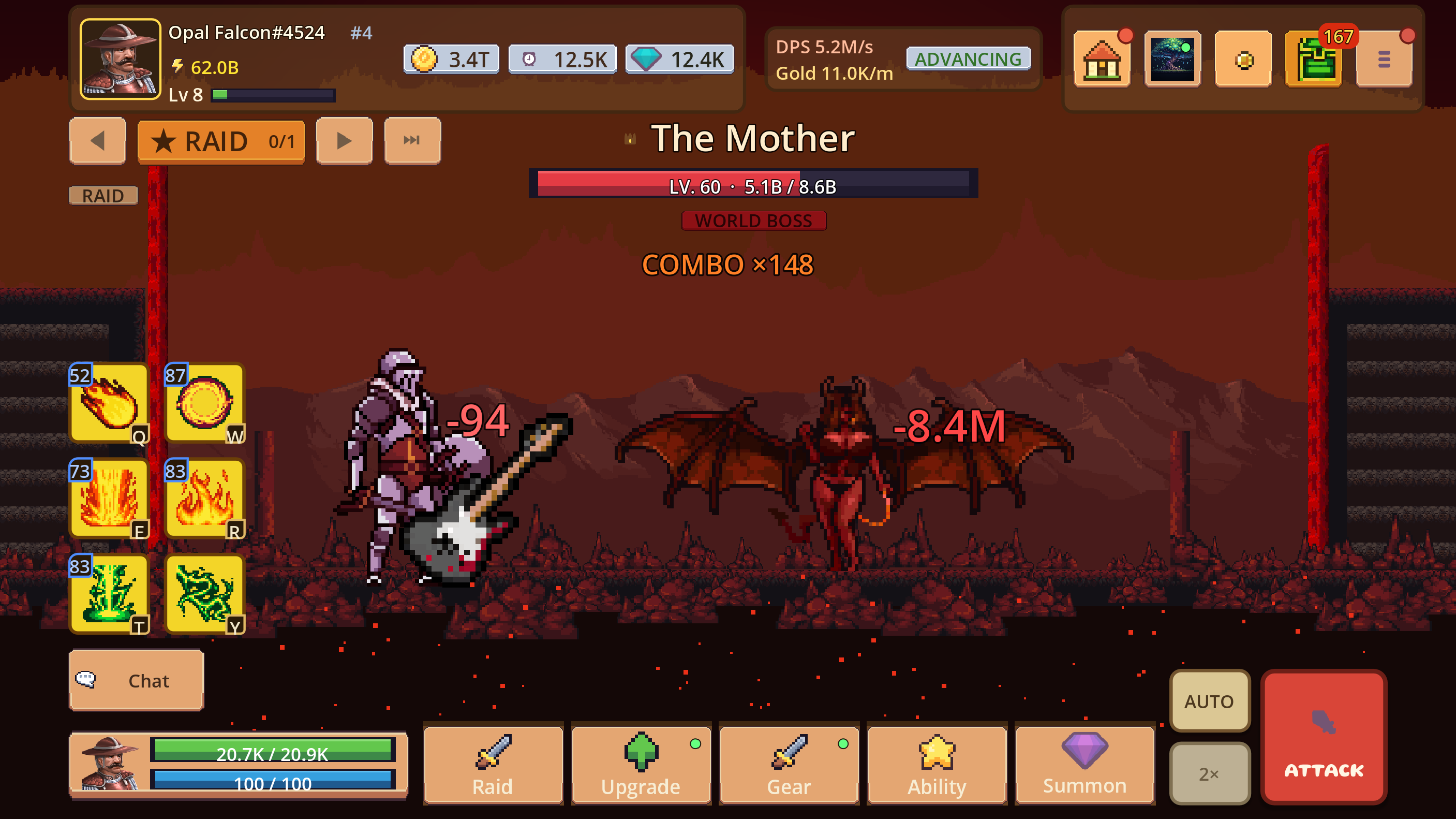
A world boss is not only a larger health bar. It gives you a stable target for comparing changes. Run it once, note the failure point or result, adjust one part of the build, and run it again. A controlled comparison produces more useful information than repeatedly trying the same configuration.
Leaderboard position can be motivating, but it is not the only measure of progress. A more reliable build, a newly solved encounter, or a clearer understanding of an ability interaction are meaningful achievements even when another player has a larger number.
Before you leave
- Equip the items you intend the party to use.
- Spend resources only where you understand the expected benefit.
- Confirm that the party can complete the routine encounter reliably.
- Leave the game normally; you do not need to keep it running for offline progression.
On return, read the offline summary, inspect what changed, and repeat the same observe–decide–test loop. The systems become easier to understand when each session has a purpose.
Next: how idle progression works · fair-gacha rules · systems reference